"Renewables Are Not Replacing Our Culture – They Are Helping Us Live Better": Prima On Uganda's Energy Future
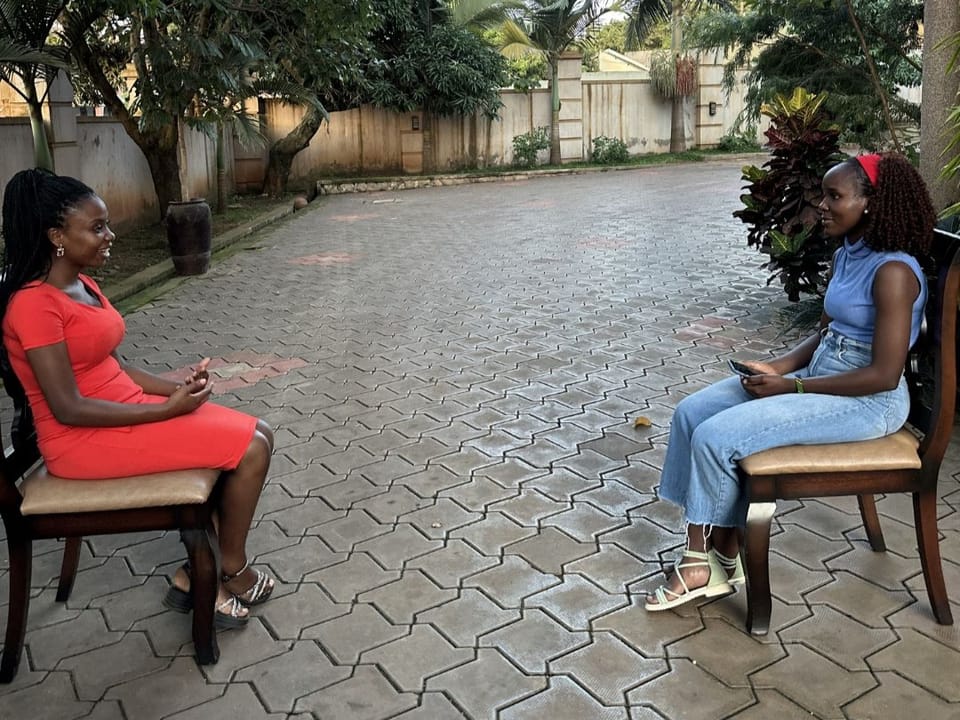
Think of energy the way Prima describes it – not in the language of physics textbooks, but in the language of daily life. It is the strength it takes to carry a jerrycan of water from a borehole. It is the fire that cooks your matooke. It is what makes things move, heat up, light up, and do the work that keeps families and communities running.
Prima is a clean energy advocate who works at the intersection of technical knowledge and grassroots reality in Uganda – someone who can explain the difference between energy and power in the same breath as she describes a boda boda rider saving up for a solar home system, or a woman in Kijumba village who no longer spends half her morning collecting firewood.
In a wide-ranging interview on Uganda's energy landscape – from the fossil fuels that have shaped the country's economy to the renewables that could redefine it – Prima makes a case that is at once practical, urgent, and deeply rooted in community experience.
"Renewables are not replacing our culture," she says. "They are helping us live better without losing what matters."
"Breathing smoke from charcoal and firewood every day is like slowly poisoning yourself and your children. And cutting trees is making our environment less reliable. We can do better."
Starting With The Basics – And The Myths
Before any conversation about the energy transition can begin, Prima insists on clearing the ground of misconceptions that hold communities back from embracing change.
The most persistent myth, she says, is that clean energy is only for wealthy households in Kampala.
"Today a basic solar home system can light your house, charge phones, and even run a small radio or TV," she explains. "The price has come down so much that even a boda boda rider can save up for one."
The numbers support her. Uganda's off-grid solar market has expanded significantly through Pay-As-You-Go (PAYGo) models and results-based financing programs – with PAYGo receivables in Uganda's off-grid market reaching approximately USD 87 million in 2022, demonstrating that adoption has reached well beyond the wealthy. Programs like the Beyond the Grid Fund for Africa (BGFA) and the Energy and Electrification Support Project (EASP) have accelerated uptake among lower-income households across the country.
The second myth Prima targets is equally stubborn – the idea that charcoal and firewood must remain at the heart of Ugandan domestic life because that is simply tradition.
"Tradition does not have to mean suffering," she says pointedly. "Breathing all that smoke every day carries serious health consequences – for you and for your children. And the environmental costs of deforestation are real – contributing to land degradation and potentially affecting local rainfall patterns. Renewables are not an attack on who we are. They are an upgrade."
The World Health Organization recommends transitioning away from polluting cooking fuels as a health priority – and field studies in Uganda have documented meaningful reductions in indoor air pollution when improved cookstoves replace three-stone fires.
How Fossil Fuels Built An Unequal Economy
To understand where Uganda needs to go, Prima argues, you first have to be honest about where fossil fuels have brought it.
Petroleum products – petrol, diesel, and heavy fuel oil – power Uganda's transport sector and backstop its electricity grid during droughts, when hydropower output drops. Oil products account for approximately 11% of Uganda's final energy consumption, almost entirely for transport, while biomass dominates the total energy mix. As a landlocked nation, Uganda depends heavily on road transport powered by imported petroleum, making the country acutely vulnerable to global oil price fluctuations.
"Fossil fuels made transport cheap and kept factories running in many places around the world," Prima acknowledges. "But in Uganda, most of that money stayed with big companies and rich nations. We pay high prices at the pump, breathe fumes in traffic jams in Kampala, and rural families still walk long distances for firewood while our forests disappear."
Uganda's emerging oil sector – with an estimated 6.5 billion barrels in place and approximately 1.4 billion barrels recoverable in the Albertine Graben near Lake Albert – promises to shift that equation. The East African Crude Oil Pipeline, stretching approximately 1,443 kilometres to Tanzania's coast, is designed to unlock those export revenues. President Museveni has described the oil discovery as a catalyst for "economic transformation, industrialization, and national prosperity."
But Prima is not uncritical of the path from resource wealth to shared prosperity.
"The people who drill and sell the oil got wealthy," she says. "But many Ugandan communities got left with polluted water, health problems, and higher food prices when climate change hit crops. Land acquisition for oil projects has displaced communities, and the compensation has often not matched what people lost."
These concerns are well documented. Between 3,648 and over 4,954 households have been affected by land acquisition across the Tilenga project and EACOP corridor alone, with NGOs, human rights organizations, and affected communities raising consistent concerns about inadequate compensation and disrupted livelihoods.
"A just transition means we move to solar, hydro, biogas, and wind in a way that does not leave anyone behind. The first solar connections and clean cookstoves should go to villages and slums – not only to big hotels in Entebbe."
What A Just Transition Actually Means On The Ground
For Prima, a just transition is not a slogan or a policy document. It is a set of concrete commitments that determine whether the shift to clean energy deepens inequality or begins to correct it.
"It means training mechanics who fix generators today to also fix solar panels tomorrow so they keep earning," she says. "It means government and companies sharing the benefits fairly, creating local jobs installing panels or making briquettes, and helping families who depend on charcoal selling to switch to new businesses without going hungry."
These priorities align closely with Uganda's own Energy Transition Plan and Energy Policy 2023, which emphasize universal access, clean cooking as a health and development priority, and inclusive green growth as central goals of the transition.
She points to the mechanics of transition finance as a critical pressure point. Many families want solar but cannot pay the full price upfront. Banks often charge high interest or require collateral – like land titles – that low-income households simply do not have. Tax treatment of solar components has varied and shifted over time, creating uncertainty for both buyers and vendors.
"When government, banks, and youth groups work together to make finance easier and rules friendlier, things move faster," she says simply.
The grid presents its own challenges. Only approximately 28% of Ugandans have grid connections, according to Afrobarometer 2024 data – and even where connections exist, frequent outages mean that households and businesses often need backup systems regardless. Extending the grid and ensuring its reliability, while simultaneously scaling off-grid solutions, are parallel imperatives.
Understanding The Numbers – Without The Jargon
When Prima turns to the metrics that energy analysts use to compare different power sources, she translates them without condescension – making the case for renewables in terms that ground the global debate in Ugandan realities.
LCOE – the Levelized Cost of Energy – is, she explains, simply asking: "Over many years, what is the real cost of each unit of electricity I get?" Solar and small hydro increasingly win that comparison against diesel generators that require expensive fuel purchases every week, with high variable costs that solar's largely upfront investment avoids.
Capacity factor – how often a system actually produces power – is where diesel's flexibility shows. But Uganda's solar resource is substantial: the country receives approximately 4.5 to 5.5 peak-sun-hours per day depending on location, according to Global Solar Atlas data, making solar a reliable baseload option for households and mini-grids.
EROI – Energy Return on Energy Invested – measures how much energy a system gives back compared to what goes into building and running it. Meta-analyses of modern solar technology show positive EROI values, often well above 10, meaning the energy system generates many times more than it consumes over its lifetime.
Emissions intensity – how much CO₂ and harmful pollution each energy source produces – is where the moral and health case for the transition is clearest. Solar and wind operate at near-zero operational carbon emissions, while diesel and charcoal produce substantial CO₂ alongside particulate matter that drives respiratory illness, eye disease, and cardiovascular conditions – with women and children, who spend the most time near cooking fires, bearing the greatest exposure.
"When you look at these numbers," Prima says, "it becomes clear why shifting to clean options saves money and protects our health and land in the long run. The numbers are on our side. We just need to act on them."
From Kerosene To Solar – Communities That Made The Shift
Nowhere does Prima speak with more conviction than when she describes communities that have already made the transition – and the specific conditions that made it possible.
In Kijumba, women were trained to install and maintain small solar systems under the REPower Afrika/CECIC campaign. The results, documented by advocacy organizations including 350.org and the Uganda Standard, were tangible and lasting. Children study at night without coughing from smoke. Women spend less time fetching wood. Some have started small businesses – phone charging, small retail, after-hours services – that were simply not possible before reliable light.
"What made it work was local people being trained to sell and fix the systems themselves, affordable payment plans, and community groups that encouraged everyone to join," Prima explains. "When locals own part of the change, trust grows and progress lasts."
She also highlights youth-led clean energy entrepreneurship as a transformative force. Young people in Kasese, through the Ihandiro Youth Advocates for Nature (IYAN), have built small enterprises selling solar lanterns, improved cookstoves, and briquettes made from waste materials – combining climate action with livelihood creation in communities where youth unemployment is high.
Scaled programs have demonstrated similar impact. ENGIE/Fenix's PAYGo deployments have connected hundreds of thousands of households to solar home systems across Uganda. Government and development partner-supported mini-grid programs – including the GET Access initiative funded by the EU and KfW – are extending structured clean power access to rural communities through structured mini-grid development.
"The key was training, small starter loans or grants, and young people believing they can build something that helps their own communities," Prima says. "That combination is replicable. It just needs investment and belief."
"Efficiency is often the quickest and cheapest way to make life better right now – while we slowly add more solar and hydro. An improved cookstove that uses half the charcoal is a transition happening in someone's kitchen today"
Efficiency First – The Transition Already Underway
Before the conversation reaches large solar farms and national grid upgrades, Prima redirects attention to something quieter and often overlooked: the profound impact of doing more with less.
Energy efficiency – using less energy to achieve the same outcome – is already changing lives in Uganda. Switching from a three-stone fire to an improved cookstove that uses half the charcoal or firewood. Replacing old incandescent bulbs with LEDs that draw a fraction of the power. Charging phones during peak solar hours rather than in the evening when demand is highest.
Field studies in Uganda have documented meaningful reductions in indoor air pollution from improved cookstove adoption. National energy efficiency analyses have shown substantial potential for reducing Uganda's total energy demand through cost-effective measures – meaning fewer power plants need to be built, less diesel needs to be imported, and household budgets stretch further.
"Demand-side management is planning when you use energy so you do not overload the system," she explains. "In Uganda, where many people still use inefficient charcoal and paraffin, improving efficiency can cut the energy we need by a big amount."
Naming The Trade-Offs Honestly
Prima's advocacy is not naive about the complications of the energy transition. She insists on naming the trade-offs openly – because, she argues, pretending they do not exist only erodes the trust that makes community-level change possible.
Large solar farms need land, and if poorly planned, they can displace farmers or disrupt wildlife corridors. Mining minerals for batteries – lithium, cobalt, manganese – can harm rivers and communities if companies do not operate under enforceable environmental standards. Workers currently dependent on charcoal selling, diesel mechanics, or petrol-powered boda boda will face disruption as the energy mix shifts.
"We must be honest about the downsides," she says firmly. "But these problems can be managed."
In Uganda's context, she sees practical paths through each challenge. Small-scale solar – rooftop panels on homes, schools, and market structures – requires minimal new land. For larger projects, proper environmental impact assessments and genuine community consultation before decisions are made can ensure that affected communities agree, benefit, and are not simply displaced.
For job transitions, skills training in solar installation, system maintenance, improved cookstove production, and mini-grid operation can redirect livelihoods rather than eliminate them – aligning with the skills-based transition vision embedded in Uganda's Energy Transition Plan.
"When we involve local people and make fair rules," she says, "the benefits far outweigh the challenges. But involving people means before the decision is made – not after."
What You Can Do In The Next 30 Days
Prima closes with a challenge – not to governments or international finance institutions, but to individuals sitting in a community meeting, a church hall, or reading this on a phone in a market.
She calls it starting small but starting now.
Replace one old bulb with an LED. Buy one improved cookstove to cut charcoal use in your home. Talk to your savings group or church group about solar lanterns. Support a local solar vendor by buying from them or telling others. Learn one simple maintenance skill – how to clean a solar panel, how to extend a battery's life – so you can help your neighbors. Invite someone from a solar company to speak at a youth group meeting in your village.
"Even one family switching saves money and breathes cleaner air," she says. "And when many do it, the whole community changes."
The WHO's global guidance endorses exactly this approach – immediate transitions away from kerosene and biomass toward clean alternatives as a health intervention as much as an environmental one. Uganda's off-grid market, growing through PAYGo adoption, vendor networks, and youth enterprise, shows that the aggregate of individual decisions adds up to structural change.
"You do not have to wait for the government or a big company to start," Prima says. "The transition is already happening in people's kitchens and on people's rooftops. Join it."
"A just transition means we move to solar, hydro, biogas, and wind in a way that does not leave anyone behind. It means training, fair sharing of benefits, and making sure the people who have had the least are first in line for the gains – not last."
– Prima, Clean Energy Advocate, Uganda
Prima Atukwase is a Ugandan clean energy advocate focused on making the renewable energy transition inclusive, community-centered, and accessible to the households and communities most affected by energy poverty across Uganda.