The Santa Marta Paradox: Inside Bukavu's Fight For True Energy Justice

BUKAVU, Democratic Republic of Congo — In late April 2026, the international climate community gathered in Santa Marta, Colombia, for a historic summit. For five days, global delegates, policy architects, and environmental organizations debated a single, existential objective: executing a fair, orderly, and socially just phase-out of global fossil fuels. The Democratic Republic of Congo (DRC) was a central focus of these high-level proceedings, positioned not merely as an observer but as a vital frontier for the expansion of global renewable energy networks.
Yet, thousands of miles away from the coastal breeze of Colombia, on the steep, rain-slicked hillsides of Bukavu, those grand global declarations ring hollow against a punishing daily reality. In this lakeside capital of the South Kivu province, the clean energy transition is not a theoretical model or an abstract calculation of carbon credits. Instead, it is an immediate, daily divider—a structural barrier that dictates who is granted the dignity of modern utilities and who is left economically stranded, breathing in toxic timber smoke in the dark.
In a comprehensive field investigation and forum organized by the local climate advocacy chapter End Fossil Occupy DRC, grassroots defenders gathered to document the human toll of this deep structural divide. The findings paint a sobering portrait of a city fractured by energy poverty, where top-down green initiatives risk mirroring the exact exploitative economic systems they were meant to replace.
The Topography Of Power: Bukavu's Socio-Economic Fault Lines
To understand the energy crisis in Bukavu is to understand the stark topography of the city itself. Access to electricity is strictly determined by wealth and location, splitting the municipality into two distinct socio-economic worlds.
In sprawling, working-class and peri-urban districts such as Bagira, Kadutu, and sectors peripheral of Panzi, public infrastructure has effectively collapsed. For the residents of these densely populated neighborhoods, the public electrical grid is either entirely non-existent or defined by crippling, unpredictable blackouts that can last for weeks. Power is not a baseline utility; it is a rare, volatile luxury.
In sharp contrast, central and affluent enclaves like Nguba and Muhumba manage to bypass this institutional decay altogether. Wealthier families insulated within these zones seamlessly adapt to the grid's failure by purchasing private solar home systems, automated battery back-ups, and liquefied petroleum gas.
"Access to energy in Bukavu is not merely a technical issue. It is a profound matter of social and economic inequality. The current system fundamentally penalizes the poor for being poor."
For the vast majority of Bukavu's working class, the financial barrier to clean alternatives is simply insurmountable. When a household struggles to secure baseline nutrition, the upfront capital required to purchase a commercial solar array or a gas cylinder is an impossible dream. Left with no institutional support and no viable alternatives, the city's poorest residents are forced into an involuntary dependence on traditional biomass fuels.
The Indoor Frontier: Gender, Pollution, And Environmental Feedback Loops
The immediate, devastating consequence of this structural energy deficit is the city's total reliance on firewood and charcoal — locally known as makala. The extraction, trade, and consumption of these traditional fuels exact a brutal toll on human health and local ecosystems, creating a cascading crisis that starts at the household stove and ends in regional ecological disruption.
This domestic energy burden is borne overwhelmingly by women and children. Because traditional domestic roles position women and youth as the primary caretakers of the household, they spend the vast majority of their days inside enclosed, poorly ventilated kitchens preparing food over open flames.
"The people most affected by the total lack of access to energy are primarily the women and children. They are the ones trapped in the kitchen for hours, continuously inhaling dense carbon monoxide and toxic smoke. This is not just an inconvenience; it is a direct, daily assault on human health."
The medical consequences are severe and predictable: chronic respiratory illnesses, cardiovascular disease, and severe eye infections are systemic throughout Bukavu's working-class neighborhoods. Yet, the crisis does not remain contained within the home. The insatiable urban demand for makala drives a predatory logging trade that is rapidly stripping the surrounding South Kivu hillsides of their vital tree cover.
This localized deforestation triggers a destructive environmental feedback loop. When the forest canopy is cleared, the structural integrity of the hillside soil is fundamentally compromised. Bukavu is a region defined by intense, tropical rainy seasons. Without the stabilizing architecture of root systems to absorb moisture and anchor the earth, the saturated soil easily gives way.
The results are catastrophic: severe soil erosion washes away critical agricultural topsoil, systematically undermining regional food security. In the worst cases, these destabilized hillsides trigger massive, fatal landslides that sweep through informal settlements, burying homes and cementing a cycle of ecological and human devastation.
The Illusion Of Consent: Confronting Top-Down Green Development
As international climate finance pours into sub-Saharan Africa, Bukavu has seen a rise in renewable energy and environmental conservation projects funded by external developers and global NGOs. However, grassroots activists warned that these initiatives frequently suffer from a fundamental flaw: the total exclusion of the local population from the planning and decision-making processes.
Local advocacy groups report a consistent, troubling pattern where international developers drop pre-packaged green projects into communities without seeking genuine local consultation or informed consent. Decisions are routinely made in distant corporate offices, and infrastructure is deployed on the ground without analyzing whether it aligns with the immediate survival needs or financial realities of the residents.
This top-down approach inevitably leads to operational failure. Climate defenders point to early solar energy programs deployed in Bukavu's peripheral neighborhoods as a classic example of this institutional disconnect.
Initially, external organizations introduced complex, high-capacity solar kits that were far too expensive for the local population to lease or maintain. The systems were designed with Western consumption patterns in mind, completely ignoring the basic economic limitations of an underserved Congolese neighborhood. The kits sat idle, and the project stalled because the community simply could not adapt to the financial structure imposed upon them.
True youth progress was only made when local associations, independent NGOs, and women's groups organized to push back against the developers. By demanding a seat at the table, these grassroots coalitions forced project managers to adjust their models to the local context.
The equipment was scaled down to focus on affordable, essential daily functions: providing basic household lighting and phone charging stations. Payment structures were reworked into flexible, community-managed micro-subsidies.
The lesson from Bukavu is clear: environmental projects are not inherently successful just because they are "green." To be effective and sustainable, they must be co-designed alongside the people who will actually use them. Community integration is not an administrative hurdle to be cleared; it is the absolute foundation of technical relevance.
The Mud And The Markets: The Hidden Perils Of Climate Research
Compounding the policy failures in South Kivu is a severe, chronic data deficit. Accurate, long-term metrics on air pollution levels, localized energy consumption patterns, and smoke-related respiratory illnesses are incredibly rare. What little data does exist is collected under precarious conditions by underfunded university researchers and local NGOs executing ad-hoc studies.
The physical and social labor required to collect this data inside Bukavu is grueling, defined by operational barriers that external analysts rarely factor into their equations. Field research in the city is a constant battle against geography and climate.
During the intense rainy seasons, Bukavu's unpaved, steep neighborhood roads quickly transform into deep, hazardous rivers of mud. The terrain becomes completely impassable for standard vehicles, creating a logistical nightmare. Researchers are forced to rely entirely on local motorcycle taxis to reach remote data collection points — but when the downpours intensify, even the most experienced drivers routinely refuse transit, stranding field teams and paralyzing research timelines.
Beyond the physical environment, researchers face significant socio-economic friction on the ground. Moving through bustling public markets to interview vendors regarding the logistics and pricing of the charcoal trade requires navigating deep-seeded communal skepticism.
Many shopkeepers, operating on razor-thin profit margins and accustomed to predatory state surveillance, view data collectors with intense suspicion. Queries regarding transport costs, supply origins, and monthly revenues are frequently met with evasion or open hostility, with vendors wary that the documentation will be weaponized by corrupt officials to enforce arbitrary tax hikes rather than provide structural aid.
Similarly, when conducting household energy audits in low-income settlements, researchers must build trust from scratch. Families are often exhausted by external extractions — whether by corporate researchers or political figures — that promise future development but yield no tangible improvements to their daily lives. Gathering ethical, accurate data in this environment requires a long-term community presence, patience, and absolute transparency regarding how the information will be utilized.
The Irony Of Modernization: The Specter Of Green Gentrification
Perhaps the most complex threat facing Bukavu's urban poor is a phenomenon that local climate defenders refer to as green gentrification . It is a bitter socioeconomic irony: even when urban improvement and renewable energy projects achieve mechanical and environmental success, they can inadvertently trigger the displacement of the very people they were designed to lift up.
When a sustainable infrastructure project successfully installs a localized mini-grid, stabilizes clean utility access, or establishes a managed green space within an underserved neighborhood, the overall desirability of that zone instantly rises. In the absence of strict public protections, property owners and private real estate developers quickly capitalize on these modernized surroundings.
Rents and baseline service costs are aggressively inflated to attract higher-income tenants. For the indigenous, low-income residents who endured the years of energy abandonment and toxic smoke, this sudden economic surge is devastating. Practically overnight, they find themselves priced out of their own community.
This dynamic creates a cruel cycle of displacement. Vulnerable households are forced to pack up and move further into the unpowered, unpaved peripheries of the city, effectively pushed out by the arrival of the clean energy grid.
Without strong legal regulations and localized rent controls, market-driven climate transitions will inevitably exploit the poor. The benefits of international green financing are stripped away from the vulnerable, transforming a tool for social equity into an instrument of displacement.
A Non-Negotiable Manifesto For The Congolese Transition
As the DRC navigates its position within the post-Santa Marta global climate landscape, the advocates on the front lines in Bukavu are demanding a profound shift in policy. They argue that the metrics of success for the green transition cannot be measured solely in kilowatts generated or dollars invested; they must be measured by the security and equity granted to the poorest citizens.
To achieve a truly just transition, a comprehensive blueprint for structural reform is being advanced by local civil society:
- Decentralized Infrastructure: Bypassing the bloated, centralized public grid to invest directly in small, localized power plants and community-managed micro-hydro systems constructed within underserved working-class neighborhoods.
- Deep Institutional Subsidies: Moving past abstract financing to establish national or international subsidy pipelines that eliminate the upfront capital barriers keeping families dependent on makala, making solar cookstoves and clean gas accessible to every household.
- Localized Technical Capacity: Launching specialized training programs to equip local youth and neighborhood technicians with the skills to install, maintain, and repair clean energy equipment, ensuring long-term operational independence.
- Aggressive Public Regulation: Implementing strict government oversight to guarantee absolute price transparency, verify equipment quality, and actively prevent real estate developers from using green infrastructure upgrades to execute predatory evictions.
"The technical quality and sustainability of a solution means absolutely nothing if it is built on a foundation of social injustice," states Parfait Mushanganya, a Bukavu-based climate advocate and biologist. "A just energy transition can no longer be treated as a negotiable luxury or a corporate afterthought. For the communities of the DRC, it must be an absolute, non-negotiable right."
For the women rising before dawn in the mud of Bagira, and for the children breathing in the smoke of the city's kitchens, the stakes could not be higher. The ongoing struggle in Bukavu serves as a vital warning to the global climate movement: if the transition to clean energy does not actively dismantle the existing structures of poverty and inequality, it will simply power them with a different source.
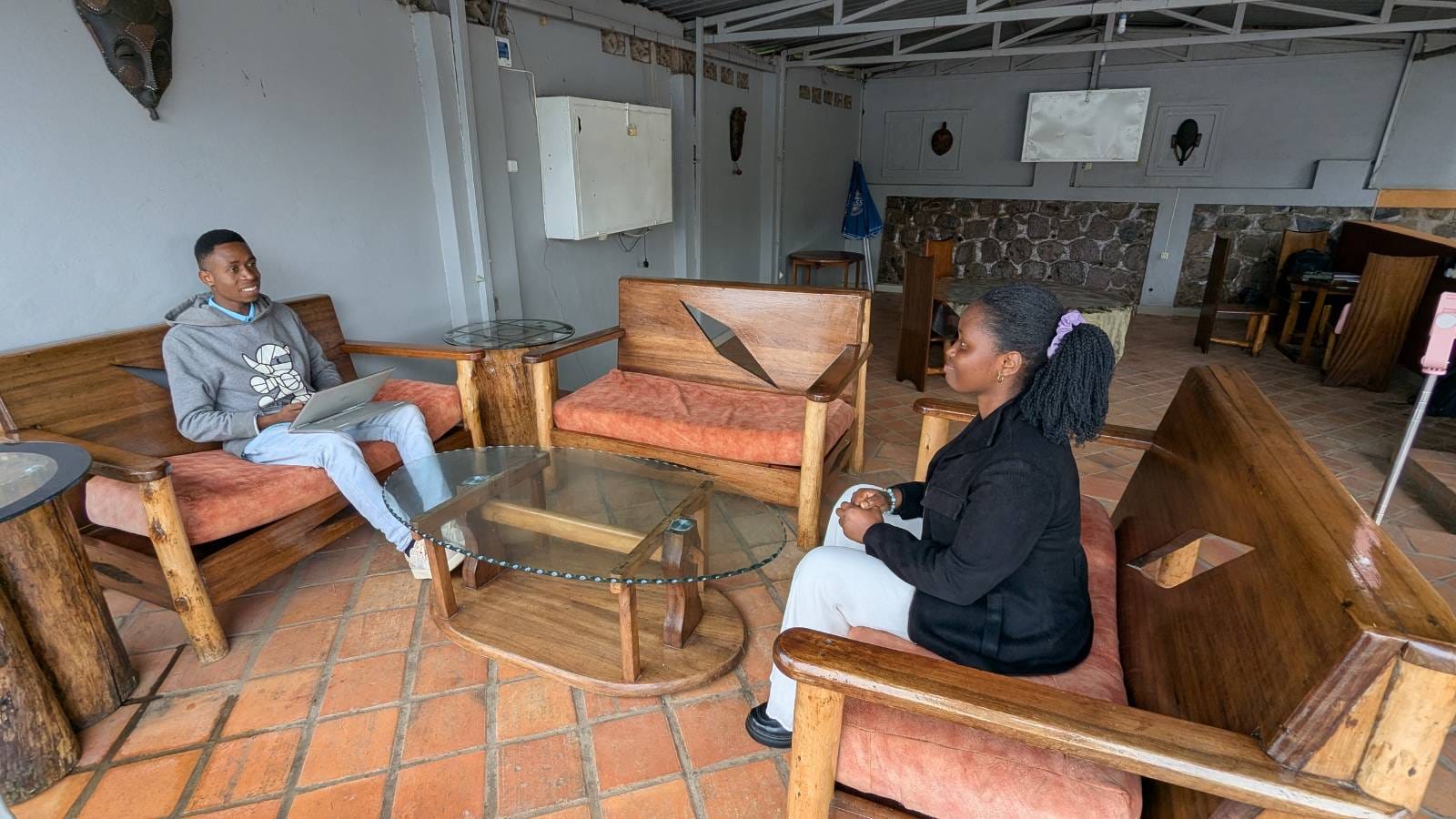
"A just energy transition should leave no one behind. It should start with the frontline communities"
– Mema Clarisse, Climate Advocate, DRC
Mema Clarisse is a Congolese climate advocatean, environmental researcher at the Official University of Bukavu, and field advocate with the local non-governmental organization Action for Life. She is focused on community empowerment, environmental rights, and equitable energy access across DRC.