Blood Minerals, Military Escorts, And A Paper Trail: How Conflict Coltan From The DRC Is Flowing Through Uganda Into Your Phone
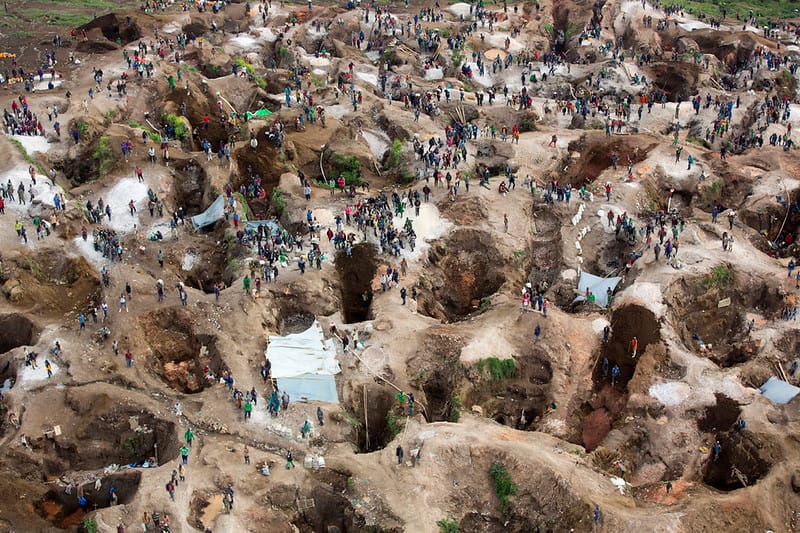
Every smartphone made today contains tantalum. Most of the world does not know where this vital mineral comes from. In many cases, this mineral can be traced back to the conflict zone in the eastern Democratic Republic of Congo, where the route it travelled to get into that phone passed through Uganda.
This is not a new allegation. It is a documented, evidence-based finding, one supported by UN Group of Experts reports spanning more than two decades, U.S. Geological Survey production data, UN Comtrade trade records, U.S. Treasury sanctions designations, and field research conducted by organizations with direct community presence in western Uganda's border districts.
What is new is the scale, the sophistication, and the urgency.
A comprehensive research report by the Centre for Citizens Conserving Environment and Management (CECIC), headquartered in Kasese (Uganda), documents the systematic smuggling of coltan (primarily for: tantalum) cassiterite (tin), and wolframite (tungsten), collectively known as the 3T minerals, from conflict-affected areas of eastern DRC into Uganda, and their onward transit through Kampala and Mombasa into global supply chains. It identifies the specific commercial mechanisms enabling this trade, maps the military and institutional infrastructure that protects it, and names the accountability frameworks that have demonstrably failed to stop it.
The report's conclusion is unsparing: Uganda functions as both a transit corridor and a laundering hub for DRC-origin 3T minerals–and that role has never been more active, more valuable, or less scrutinized than it is right now.
"The smuggling of coltan and 3T minerals from eastern DRC through Uganda is not a peripheral or informal trade. It is an organized, state-facilitated system. It is financed by armed groups that have killed hundreds of thousands of people. It is powering devices that hundreds of millions of people are using right now."
– CECIC Report, 2025
The Minerals – And Why They Matter
Before the smuggling routes, before the armed groups and the military escorts, it is worth understanding precisely what these minerals are and why the world cannot stop wanting them.
Coltan, short for columbite-tantalite, is a dull black metallic ore. The element of commercial significance is tantalum, refined from its tantalite component. Columbite is generally a mixture of iron, manganese, and niobium. Tantalum metal is heat-resistant, corrosion-proof, and exceptional at storing and releasing electrical charges. Those properties make tantalum capacitors indispensable in smartphones, laptops, automotive electronics, and aerospace components. A typical smartphone contains roughly 40 milligrams of tantalum. A modern electric vehicle contains substantially more.
The DRC produced an estimated 980 metric tonnes of tantalum in 2023, accounting for approximately 41% of the world's supply. Combined with Rwanda, the two countries represent around 60% of global production. The United States produces no coltan domestically. It relies entirely on imports. Tantalum is on the U.S. USGS critical minerals list, the EU's Critical Raw Materials Act list, and is a factor in both American and Chinese strategic stockpiling decisions.
The tantalum market is structurally opaque in ways that actively facilitate smuggling. Unlike gold, copper, or tin, tantalum is not traded on a public commodity exchange. Prices are set through private, unregulated contracts. As of 2024, the average monthly price for tantalum ore was approximately 150 euros per kilogram; a price level the USGS noted remained below the threshold needed to make most known deposits outside the Great Lakes region economically viable. This means the DRC's artisanal mines, however dangerous and poorly regulated, remain the world's most cost-competitive source. Global demand has no credible alternative.
Cassiterite, the primary ore of tin, is lower in value per kilogram than coltan, which changes the smuggling economics: volumes must be larger to generate equivalent revenue. Eastern DRC's South Kivu and Maniema provinces hold commercially significant deposits worked primarily by artisanal miners. Tin's industrial applications are broad: solder in electronics manufacturing, food-grade packaging, and alloys in advanced manufacturing.
Wolframite, the ore from which tungsten is refined, is the hardest natural metal, with applications in drill bits, cutting tools, anti-armor munitions, and specialist electronics. One critical distinction sets tungsten apart: its primary military applications mean that smuggling wolframite carries implications under UN Security Council Resolution 1533 that go beyond conflict minerals due diligence, specifically, the arms embargo on groups operating in eastern DRC.
The Mine That Defines The Corridor
At the center of this story is a single mine in Masisi territory, North Kivu: Rubaya, that produces approximately 15% of global tantalum.
In late April 2024, according to UN expert reports and U.S. Treasury sanctions, the M23 rebel group, backed by Rwanda, seized the Rubaya Mine. Within months, M23 had established a structured tax-and-export system: a $7 (€6)-per-kilogram levy on all coltan production, generating an estimated $300,000 (€260,000) per month from coltan alone. Combined with taxes on tin, tungsten, tantalum, and manganese across Rubaya's surrounding supply chains, total M23 revenue from the zone reached an estimated $800,000 (€690,000) per month according to the UN Group of Experts' December 2024 report.
By January 2025, M23's offensive had seized Goma, followed by the capture of Bukavu in February 2025–the two largest commercial hubs in eastern DRC's mineral economy. The UN's July 2025 report to the Security Council documented what followed: minerals from North Kivu, particularly coltan from Rubaya, were being smuggled across the DRC's borders at unprecedented levels.
In a single week in March 2025, 195 tonnes of 3T minerals were smuggled across the DRC's main borders. Satellite evidence and trader testimony pointed to simultaneous flows via Ugandan border crossings. The Uganda corridor, historically considered secondary to Rwanda's, was no longer secondary.
Then, on January 28, 2026, a landslide and mine collapse at Rubaya killed more than 200 people. Tantalum prices in Rwanda spiked immediately. The broader M23-controlled export infrastructure remained intact, but the collapse disrupted the most active documented smuggling route for several weeks, illustrating both the singular importance of Rubaya to global tantalum supply and the human cost of its unregulated artisanal structure.
"In a single week in March 2025, 195 tonnes of 3T minerals were smuggled across DRC's main borders. Satellite evidence and trader testimony pointed to simultaneous flows via Ugandan border crossings."
– UN Group of Experts, July 2025
The Rwanda-Uganda Dynamic – Why Uganda Matters Now
Rwanda has been the better-documented and more scrutinized transit state for DRC 3T minerals. The numbers are stark: in 2024, Rwanda officially produced 350 tonnes of tantalum. Still, it exported an estimated 715 tonnes, more than twice its stated domestic production, according to UN Comtrade data cited in the UN July 2025 report. Rwanda's coltan exports increased 42% in the third quarter of 2024 alone, perfectly tracking M23's takeover of Rubaya in late April of that year.
International scrutiny of Rwanda has intensified sharply. U.S. Treasury sanctions issued in February 2025 targeted James Kabarebe, Rwanda's Minister of State for Regional Integration, for orchestrating Rwandan Defense Forces support for M23 and coordinating the export of extracted DRC minerals. The European Parliament voted in February 2025 to suspend the EU-Rwanda strategic minerals partnership, a partnership that had committed several hundred million euros in exchange for priority access to critical raw materials, including coltan and tantalum. Critics, including the DRC government and members of the European Parliament, had described it as the EU effectively paying Rwanda for minerals extracted from Congolese territory.
When international scrutiny of Rwanda intensifies, history shows the Uganda corridor absorbs the overflow. Between 2018 and 2021, when U.S. scrutiny of Rwanda increased sharply following Section 1502 Dodd-Frank enforcement actions, Rwanda's share of U.S. tantalum imports dropped from 54% to essentially zero by 2021. Those minerals did not stop flowing. They found alternative channels.
Uganda is the primary alternative. And its role is currently far less scrutinized than Rwanda's–for reasons the CECIC report argues are structural, not accidental.
Uganda is an active ADF counter-terrorism partner with the United States and Europe. Rwanda has lost that political cover through its documented M23 support. Fewer investigative researchers have focused on the Uganda corridor specifically. And Uganda's combination of genuine domestic 3T production and documented historical re-export patterns makes clean attribution harder.
"This reduced scrutiny is itself a research finding," the CECIC report states. "If Rwanda faces tightening controls while Uganda does not, the system adapts."
The Western Border In Detail
Uganda's western border with DRC runs approximately 830 kilometres from the Rwenzori highlands in the south to Lake Albert in the north.
The Mpondwe/Kasindi crossing in Kasese district is the most significant formal entry point for 3T minerals. UN experts and UNEP-MONUSCO have both documented Mpondwe as a significant coltan smuggling hotspot, with minerals moving from North Kivu's Masisi and Rutshuru territories across the Rwenzori foothills.
Coltan from the Bunagana border point in Rutshuru territory–a town M23 has controlled intermittently since 2012 and continuously since 2022-is specifically documented as a diversion point toward Uganda. The ENACT Africa research programme and the UN Trafficking of Coltan report both identify Bunagana-to-Uganda as a primary smuggling vector for Masisi-origin coltan. From Bunagana, minerals move through Kisoro district before reaching Kampala.
The Kasese district functions as the first significant aggregation point inside Uganda. Field researchers from the Global Initiative Against Transnational Organized Crime documented Kasese hosting unlicensed mineral traders alongside licensed ones, with Kampala-based buyers making regular purchasing trips. The six-hour road journey from Kasese to Kampala is the final domestic leg before export documentation is issued.
The corridor map, updated with 2024-2025 data including M23's post-Goma expansion, documents the following active routes:
| Mineral | DRC Source Province | Uganda Entry Point | Known Volume / Status |
|---|---|---|---|
| Coltan / Tantalum | North Kivu (Rubaya/Masisi) | Kasese, Bundibugyo | 120 t/month M23-taxed (2025) |
| Coltan / Tantalum | South Kivu (Walungu, Mwenga) | Bwera, Mpondwe crossings | Volume undocumented; active route |
| Cassiterite / Tin | Maniema, South Kivu | Beni to Kasese corridor; Ituri crossings | Mixed parcels; SOKIMO contract (2020) |
| Wolframite / Tungsten | South Kivu (Kamituga) | Western Uganda informal crossings | Lower volume; arms embargo |
| Mixed 3Ts (post-Goma) | North Kivu (Goma hub, 2025) | Lake Albert & Ituri routes | 195 t total 3Ts in one week, Mar 2025 |
How The Laundering Works
The laundering mechanism for 3T minerals in Uganda is structurally different from gold laundering, and understanding it precisely is essential to understanding why it has been so difficult to detect and intercept.
Uganda has genuine artisanal coltan and cassiterite production, primarily in Kasese and Bundibugyo districts in the Rwenzori region. This production is real but small, and critically, it is poorly documented. No independent audit has compared Uganda's declared domestic mine-site output against its export figures.
This documentation gap is the exploit.
A trader can present a mixed consignment–partly genuine Ugandan-mined coltan and partly DRC-origin, and declare the entire batch as domestic. Customs officials who lack technical verification capacity, or who are complicit, issue origin certificates accordingly.
A second mechanism is the misdeclaration of volume. Comptoirs, the licensed trading houses that aggregate and export minerals, routinely undervalue exported volumes on documentation to reduce tax liability, according to ENACT research on DRC mineral trading structures. This same practice, applied by Ugandan-registered entities to DRC-origin minerals transiting through Uganda, further obscures both volume and origin.
The result: Uganda exported 2.5 tonnes of coltan annually from legitimate domestic sources in non-conflict years. In 1999, at the height of Uganda's documented military presence in eastern DRC, that figure exploded to nearly 70 tonnes. A UN panel at the time concluded the increase was "primarily due to the fraudulent re-export of coltan of Congolese origin." That pattern has never been structurally resolved. It has only varied in intensity.
"Uganda continues to falsely label DRC-sourced minerals as domestic exports. The July 2025 UN Group of Experts report named specific trading entities operating in Kasese and Kampala as intermediaries in this process."
– UN Group of Experts, July 2025
Kampala, Mombasa, And The Buyer Infrastructure
Once 3T minerals cross the DRC-Uganda border and aggregate in Kasese, they do not move directly to export. They pass through a second commercial layer of warehousing and consolidation in Kampala before final shipment, primarily onward to Mombasa's port facilities in Kenya for containerized export.
Kampala's industrial districts, particularly around Nakawa and Namanve, host a cluster of registered and unregistered commodity trading firms. Field accounts from traders and researchers documented by ENACT Africa describe these firms receiving mineral consignments from western Uganda, holding them in private warehouses where mixed-origin batches are consolidated, and then issuing export documentation under Ugandan origin certificates before onward movement.
Mombasa is eastern Africa's primary deep-water port and handles the bulk of landlocked Uganda's exports. Containerized mineral shipments documented in COMTRADE data as "Uganda-origin coltan" or "Uganda-origin cassiterite" depart from Mombasa after transiting Kenya by road. The port's role as a final transit point before international shipping means that Kenyan port authority documentation and Kenya Revenue Authority records are an underexploited data source for research on this corridor.
Chinese buyers are consistently identified in trader accounts and in prior UN expert documentation as the primary ready-market buyers at the Kampala warehouse stage. This reflects the structural reality of the global tantalum and tin supply chain: Chinese companies dominate the downstream processing and refining of 3T minerals globally. The International Peace Information Service (IPIS) has documented that artisanal miners at Rubaya in DRC are "locked in a punishing embrace with Chinese buyers who refine coltan procured from Rubaya in China."
Military Escorts And The Highway Police Post System
Perhaps the most significant and underreported element of the Uganda corridor is the institutional infrastructure that protects mineral consignments in transit.
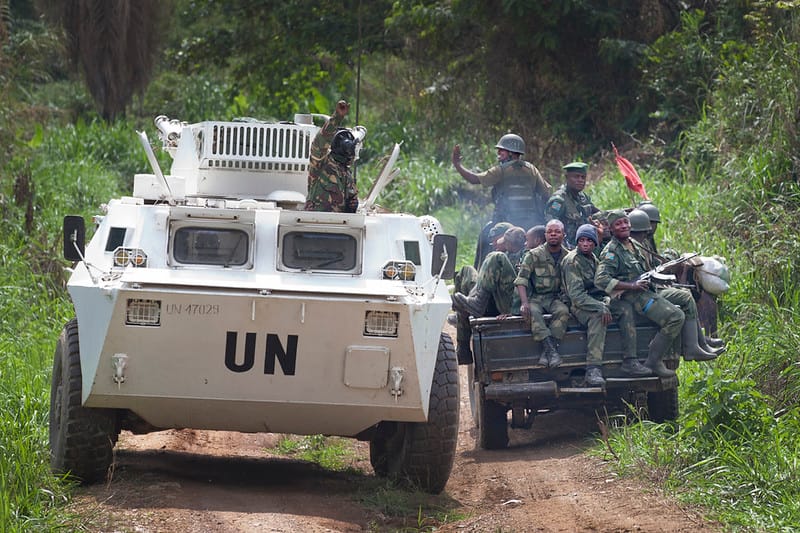
Multiple field sources, traders, civil society monitors, and community observers in western Uganda and along the Kampala-Jinja-Malaba highway corridor have reported a consistent operational mechanism: mineral-laden trucks are escorted by Uganda People's Defense Force (UPDF) officers for sections of the journey from the western border to Kampala.
This escort system serves two functions simultaneously. It provides physical security for consignments of significant commercial value. And it provides effective immunity from routine police or Uganda Revenue Authority checkpoint inspection because no roadside officer will stop and search a vehicle travelling under military escort without explicit higher authorization.
A second institutional mechanism compounds this. Truck drivers carrying mineral consignments are required to report at each police post along their route, logging their vehicle, cargo declaration, and origin certificate. Field sources report that this mandatory reporting system functions not as genuine oversight but as a revenue collection and protection network: each police post registration generates a fee and, more importantly, a paper trail of official acknowledgement that creates the appearance of state oversight.
"The combination of military escort and police post registration creates what amounts to a state-facilitated transport corridor for smuggled minerals," the CECIC report states. "Neither element alone would be sufficient: military escort without documentation creates a visible anomaly; documentation without physical protection leaves the consignment vulnerable. Together, they produce a movement system that is simultaneously protected from interdiction and equipped with paper evidence of legitimate transit."
The UPDF's Commercial Evolution – From Timber To Coltan
The involvement of UPDF officers in the DRC's resource economy is not a new phenomenon. It has evolved through three distinct phases over nearly three decades, each building on the institutional knowledge, commercial networks, and protected routes developed in the previous one.
The first phase began with UPDF's entry into DRC in 1996 as part of the coalition that brought Laurent-Désiré Kabila to power. Academic research by Titeca and De Herdt (2012) documents how UPDF commanders arriving in Kisangani and Ituri discovered what they called a "Mini Eldorado" in the eastern parts of Zaire. Initially, individual officers engaged in opportunistic diamond and gold smuggling. Quickly, commanders developed a systematic arrangement with Congolese business communities, providing military protection in exchange for access to resource flows.
In February 2022, the International Court of Justice ordered Uganda to pay the DRC $325,000,000 (€280,000,000) in reparations, payable in five annual instalments of $65,000,000 (€56,000,000) from 2022 to 2026, for violations committed during the Congo Wars (1998-2003). The Court found Uganda responsible for looting, plundering, and illegal exploitation of natural resources in Ituri, specifically listing gold, diamonds, coltan, and timber. This is not an allegation. It is a binding international legal judgment. Uganda is currently paying this reparation. The networks that enabled the original looting were never dismantled.
The second phase saw timber and fish become central to UPDF commercial activity in eastern DRC. The 2002 UN Panel of Experts documented explicitly that minerals were being loaded onto trucks officially carrying only timber at customs posts, including Mpondwe, Kasindi, and Bundibugyo, the same border crossings identified as 3T mineral entry points in the present research.
The third and current phase is the systematic involvement of UPDF officers in the 3T mineral trade. UN reports identified coltan operations under the control of UPDF colonels Muzora and Burundi, managed through the front company Trinity Investment, in which UPDF Major General Kazini held a commercial interest. Operation Shujaa's spokesperson, Major Bilal Katamba, confirmed publicly that it is "strategic for the army" to protect Ugandan companies' mining concessions in DRC, a statement that at face value describes a military providing commercial extraction security as an explicit operational objective alongside its counter-terrorism mandate.
"The International Court of Justice ordered Uganda to pay $325 million in reparations for looting DRC resources during the Congo Wars. Uganda is currently paying this reparation. The networks that enabled the original looting were never dismantled."
Child Labor – The Human Dimension at The Source
The 3T mineral trade's human cost is not limited to the communities displaced by conflict or the civilians caught in armed group territorial disputes. It begins at the mine face.
Over 40,000 children and teenagers work in DRC's coltan mining sector, according to ISS Africa's ENACT program. Children serve as washers and diggers at artisanal mine sites, and also engage in petty cross-border smuggling, selling small quantities of coltan in border towns along the DRC-Uganda frontier. This is not peripheral to the research; it is part of the supply chain structure.
The same trading networks that move adult-mined coltan across the border move child-sourced coltan. Mine-site inspection visits, which should serve as the verification point for traceability systems, were regularly sabotaged, according to field research. Government informants would warn mine operators ahead of inspections, allowing child workers to be hidden.
"This institutional failure at source has direct implications for any traceability system proposed for the Uganda corridor," the CECIC report states. "Verification must reach the mine site, not stop at the border."
The Accountability Architecture – And Why It Has Failed
Three international frameworks were designed to prevent exactly this kind of conflict mineral laundering. All three have demonstrably failed to intercept the Uganda corridor's flows.
ITSCI used a system of tagged mineral bags, chain-of-custody documentation, and field monitors. At scale, it provided the primary "clean" certification for 3T minerals from the Great Lakes region. In 2024, the Responsible Minerals Initiative revoked ITSCI's recognition after independent audits exposed systematic fraud: monitors falsifying inspection records, certificates issued for sites monitors had never visited, and M23-controlled mineral batches entering the certification system.
For Uganda specifically, where ITSCI coverage was always thinner than in Rwanda or the DRC's monitored zones, the collapse leaves no credible certification infrastructure at all.
Dodd-Frank Section 1502 has been in force since 2012, requiring U.S.-listed companies to disclose whether their products contain conflict minerals from the DRC or adjoining countries. The EU's Corporate Sustainability Due Diligence Directive (CS3D), adopted in 2024, extends similar obligations across European companies. Both frameworks require conflict mineral disclosure and supply chain due diligence, but neither has produced reliable mine-to-market traceability for 3T minerals from the DRC region.
The fundamental problem is physical: once tantalum is refined from coltan ore, it is impossible to distinguish DRC-origin tantalum from Australian or Brazilian tantalum by chemical analysis alone. Elemental fingerprinting via WD X-ray fluorescence can identify coltan source with roughly 75% accuracy for samples where mine-site reference data exists, but this technique is expensive, requires comprehensive reference databases that do not fully exist for DRC's artisanal sites, and has not been systematically adopted by commodity traders.
The August 2025 DRC-Rwanda Statement of Tenets—the first formal step of a peace agreement signed in June 2025- commits both countries to progressively eliminate barriers to the "direct and lawful export of minerals sourced in the region." Uganda is not party to this framework. If that framework formalizes the Rwanda channel while leaving the Uganda channel outside its architecture, Uganda's corridor becomes the primary laundering route that bypasses whatever traceability commitments the DRC-Rwanda deal creates.
What Needs To Happen – The Research And Reform Agenda
The CECIC report is structured explicitly as a research brainstorm and evidence base for further investigation, not a final study. It maps what is currently known, identifies the gaps that most urgently need filling, and proposes a concrete research agenda.
Three immediate investigative steps are proposed before full field research begins.
First, a desk-phase mineral production audit, comparing Uganda's Chamber of Mines and Uganda Revenue Authority 3T production and export figures for 2020-2025 against UN Comtrade partner-import records and the USGS 2025 production baseline. The Rwanda 2:1 tantalum production-export gap was identified through exactly this methodology. Applying it to Uganda will either quantify the Uganda anomaly or confirm it is smaller than currently assumed. Either result is a genuine research contribution.
Second, an actor network mapping exercise, using the anchor set from UN expert reports and U.S. Treasury OFAC sanctions, to conduct a corporate registry analysis of Uganda-registered mineral trading entities connected to named individuals. Cross-referencing against known Kampala export broker names and Kasese district licensed mineral trader registrations produces a commercial network map before fieldwork, making subsequent interviews more targeted and less dependent on informants volunteering names under duress.
Third, a parallel security, ethics, and legal review, commissioning a specific operational security protocol for western Uganda border districts and DRC border areas, engaging a lawyer with international defamation and publication law expertise in Uganda and Belgium, and establishing a secure communication infrastructure for field sources before any in-country work starts.
The report also identifies a specific technical opportunity: commissioning coltan elemental fingerprint reference samples from documented domestic Ugandan mine sites in Kasese and Bundibugyo. This would both establish what authentic Ugandan-domestic coltan looks like and create the infrastructure for future border-point testing–a research output with practical policy utility beyond the study itself. Rwanda has adopted fingerprinting in some contexts. Uganda has not.
The Recommendations – Who Must Act And How
The CECIC report closes with a detailed set of recommendations directed at four constituencies.
For the international research community: commission an independent production-side audit of Uganda's domestic mine sites, apply the Rwanda trade data reconciliation methodology to Uganda specifically, investigate the Kampala warehouse network, study the highway police post system as an institutional mechanism, examine the UPDF truck escort system, and build a coltan elemental fingerprint reference database for Uganda's documented domestic mines.
For Ugandan civil society and policymakers: the Uganda Revenue Authority should commission an independent audit comparing mineral export declaration records against Chamber of Mines production data; the Uganda Human Rights Commission should investigate labor conditions at artisanal mining sites with specific attention to child labor; Uganda's Parliament should hold public hearings on the gap between declared domestic 3T production and official export figures.
For international accountability bodies: the UN Group of Experts should expand its Uganda-specific fieldwork with dedicated investigation of the Kampala warehouse network; OFAC should assess whether Ugandan-registered mineral trading entities connected to already-sanctioned individuals warrant independent designations; the EU should condition its critical minerals engagement with Uganda on independently verified 3T production and export data; the June 2025 DRC-Rwanda peace framework's mineral governance provisions should be extended to include Uganda as a signatory.
For private sector supply chain actors: electronics manufacturers, commodity traders, and financiers whose supply chains source tantalum, tin, or tungsten from Uganda or Rwanda should immediately commission independent mine-to-market verification beyond ITSCI documentation; companies subject to CS3D should treat Uganda as a high-risk sourcing jurisdiction for 3T minerals; Chinese commodity processing and refining firms that are the primary buyers at the Kampala warehouse stage should be engaged by international investors and regulators about their due diligence practices.
"The Uganda corridor is more active, more valuable, and less scrutinized than at any point since the Congo Wars. CECIC is based in Kasese. Its researchers live and work in the communities along the western corridor. The work this report proposes is urgent."
– CECIC Report, 2025
Why This Moment Is Different
What gives the Uganda corridor's 2025-2026 situation particular urgency is the convergence of three pressures that have not previously coincided at this intensity.
Global demand for tantalum, tin, and tungsten is rising sharply, driven by EV production, consumer electronics growth, and defense procurement. M23's territorial expansion since January 2025 has given a sanctioned armed group control over the most important single tantalum-producing territory in the world. And the international accountability architecture–specifically ITSCI certification, EU due diligence requirements, and Dodd-Frank disclosures-has demonstrably failed to intercept the flow.
Uganda's role in this system has been obscured by three factors: Rwanda's higher profile as a transit state, Uganda's political value to Western powers as an ADF counter-terrorism partner, and the genuine complexity introduced by Uganda's small but real domestic 3T mining sector. None of these factors changes the underlying reality.
When Rwanda faces pressure, as it did following U.S. Dodd-Frank enforcement in 2020 and as it does again following U.S. Treasury sanctions in 2025, the Uganda corridor absorbs the overflow. The system routes around scrutiny. It has done so repeatedly for twenty-five years.
CECIC is based in Kasese, Uganda. Its researchers live and work in the communities along the western corridor. It's fifteen years of relationships with miners, local officials, traders, and border communities in Kasese, Bundibugyo, Zombo, and Nebbi represent a research asset that no external team can replicate quickly.
What follows from here depends on whether the research community, policymakers, and international accountability institutions treat the Uganda corridor as the priority it demonstrably is.
"The tantalum in your smartphone may have passed through a checkpoint in western Uganda, escorted by a military officer, documented by a complicit customs official, and warehoused in Kampala before being shipped to China. The armed group that taxed it at the mine used the revenue to sustain a war that has killed hundreds of thousands of people. These are not separate stories. They are the same story."
– CECIC Research Report, 2025: The Uganda 3T Mineral Corridor
This article is based on the CECIC research report "The Uganda 3T Mineral Corridor: Evidence Base and Research Agenda" (2025), produced by the Centre for Citizens Conserving Environment and Management, headquartered in Kasese, western Uganda. The report draws on UN Group of Experts reports (2021-2025), USGS Mineral Commodity Summaries, UN Comtrade data, U.S. Treasury OFAC sanctions documentation, and field-based research.