"Put People And The Planet First": Climate Activist Ali On Energy Justice, Community Consent, And The Fight Uganda Is Not Finished Having
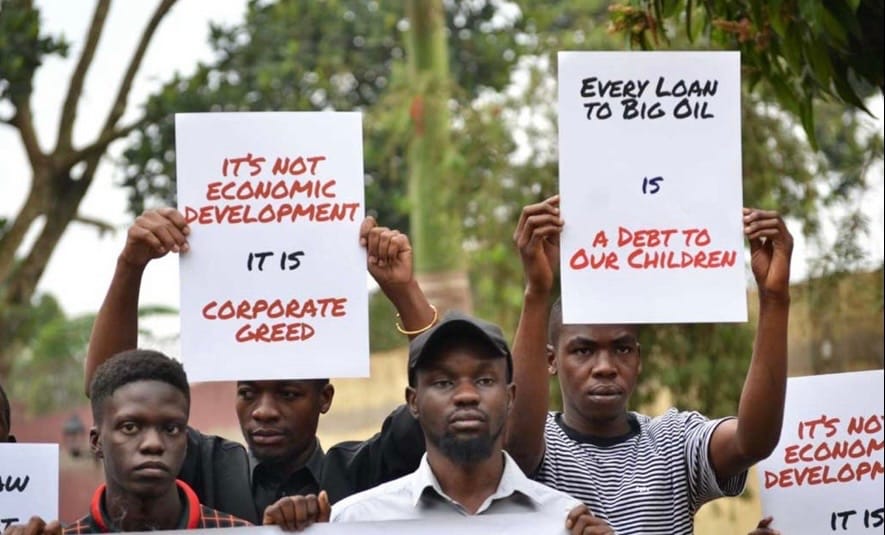
In areas like Kyotera and Adjumani in northern Uganda, women rise before dawn and walk long distances to collect firewood. It is not a choice — it is a necessity. The national grid has not reached them. Solar systems, though increasingly available, cost around the equivalent of 50 daily bags of charcoal upfront. And so the cycle continues: biomass, smoke, distance, and time lost to an energy system that has never prioritized the people who need it most.
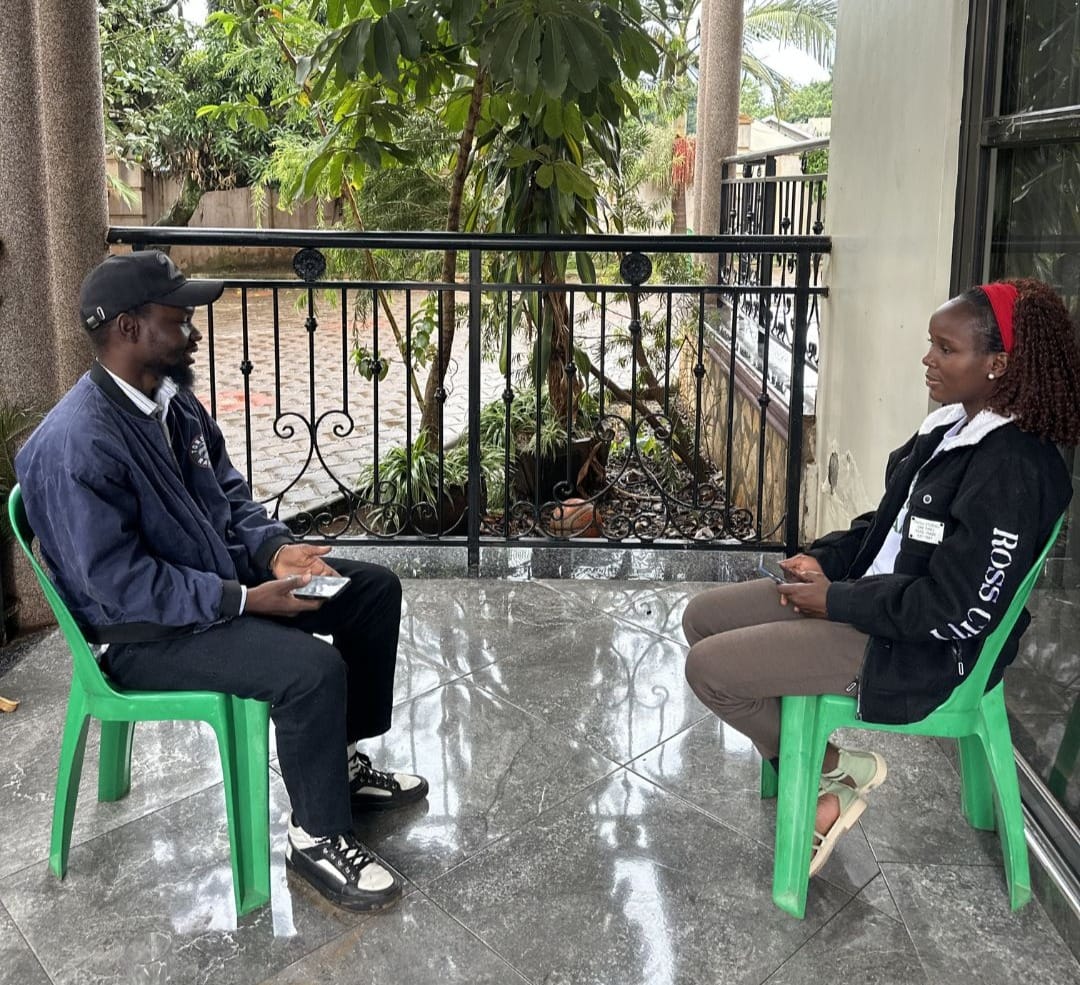
Ogwang Ali, a climate justice advocate and member of Uganda's enforcement field working to advance community transitions to clean energy, has spent years documenting this reality and pushing back against it. In a wide-ranging conversation with interviewer Clare Nassanga, he moves across the full landscape of energy justice in Uganda: from rural women breathing toxic smoke to community land being seized for oil pipelines without consent, from the successful campaign to save Bugoma Forest to the ethical responsibilities of researchers collecting data in vulnerable communities.
His closing message is unambiguous.
"A just energy transition should not be negotiable," he says. "It should be a must for these communities."
"We tell you Uganda is 70% transitioned to clean energy. But then in the low-income areas, you find it is really like there is energy poverty. The numbers do not match what is on the ground."
Who Bears The Burden — And What It Actually Costs
Ali anchors his analysis in SDG7: the Sustainable Development Goal calling for affordable and reliable clean energy for all. It is, he says, a goal whose language has outpaced its reality for Uganda's most vulnerable communities.
"Mostly we concentrate on the rural," he explains. "We find that the women in areas like Adjumani, Kyotera, they walk long distances to collect firewood. Most of them rely on biomass for cooking and for lighting. And those alternatives are not really healthy."
The financial picture is equally stark. A solar home system — even a modest one — can cost around 150,000 Ugandan shillings (about 35 €), while a day's supply of charcoal costs approximately 3,000 (about 0.75 €). The upfront gap is not just a pricing problem. It is a structural barrier that keeps low-income households locked into expensive, dangerous, and inefficient energy sources precisely because they cannot afford the investment that would free them from it.
The scale of what that costs over time is striking. Ali notes that households paying approximately 5,000 shillings a month on electricity — where they even have access — accumulate around 3 million shillings in annual energy expenditure. That figure, measured in kilowatt-hours and monthly bills, represents a disproportionate share of household income for the communities bearing it.
"We find that it is really like there is energy poverty in these areas," he says. "The statistics say Uganda is 70% transitioned to clean energy. But the numbers do not match what is on the ground."
The Air Nobody Is Counting
When Ali turns to the intersection of pollution, health, and inequality, he draws on both SDG3 — the goal on good health and wellbeing — and his own experience moving through communities where the air quality crisis is large and largely unmeasured.
The most concerning pollutant is one most people cannot see. PM(Particulate Matter)2.5 — particles smaller than 2.5 micrometres — is produced by charcoal burning, diesel combustion, road dust, and industrial activity. It penetrates deep into the lungs and bloodstream, causing respiratory illness, cardiovascular disease, and increased mortality. The World Health Organization (WHO) has identified it as one of the greatest environmental health risks globally.
"When you inhale those particles," Ali explains, "the problem is that you find that most of the activities we do — if you are heading to Kasangati, via Kiira, via Kyaliwajjala — you find that there is a lot of dust. And when you inhale those, the greenhouse gases, the most common is carbon monoxide, and also the PM2.5, that is particulate matter. It is really hazardous to our health."
What makes this crisis particularly difficult to address, he argues, is that the communities most exposed to pollution are the least equipped to measure and document it. When community members are asked to estimate how many pollution-related health incidents they experienced in the past year, they typically underestimate significantly — not because the problem is small, but because pollution has become a normalized background condition of their lives.
"You cannot really estimate pollution by counting the scent visible to the eyes," Ali says. "Most of us find that it is really challenging. That is why I think if you can really work with the government, with collective action, you can advocate for systematic changes in our community."
He points to GIS-linked pollution monitoring billboards in Kampala as an example of what community-engaged environmental data collection can look like at scale — enabling residents, planners, and policymakers to see, in real time, the quality of the air they are breathing.
"You cannot estimate pollution by counting what is visible to the eyes. Most of the time, you do not notice you are being affected — until the damage is already done."
Policy Gaps — And The Youth Who Found Them
Ali does not limit his critique to the abstract. He has been inside Uganda's policy process — as one of the youth participants who contributed to the 2007 Energy Policy review — and he came away with a clear picture of where the gaps lie.
"We identified gaps in that policy whereby we found there are equity issues," he says. "Where the women work and organize, where the youth work and organize, and then because we also take care — we find that something like solar energy, installation and maintenance — mostly we are not holding on. We are relying too much on hydropower."
The policy, he argues, needs to go further in three specific directions. First, subsidizing solar cooking stoves to make them genuinely affordable for low-income rural households — removing the upfront cost barrier that keeps families on charcoal. Second, installing grid systems in rural areas where network coverage has left communities entirely without access. Third, addressing the destruction of wetlands, which are not only vital ecosystems but critical carbon sinks whose degradation is releasing significant volumes of methane into the atmosphere.
"You find that in some areas, people are disrupting wetlands," he says. "Wetlands capture carbon — they have a one-sixth capture problem. Because of rapid climate change and global warming, there are now high rates of methane leakage. And then you also find that the women move their businesses — because they rely so much on biomass, they move to collect firewood and use it for cooking. We should have policies that work together with the community and subsidize solar cooking stoves to make them affordable."
What Communities Deserve To Know — And To Say
When major infrastructure projects arrive in a community — a pipeline, a power plant, a solar farm — Ali is unambiguous about what those communities are owed: genuine information, genuine consultation, and genuine benefit.
His reference point is the East African Crude Oil Pipeline — and what he describes as a systematic failure of consent in how communities along the route were engaged.
"The method they used — there was no consent, no transparency, and no continuation on the picture," he says. "For one acre of land they valued about 3 million shillings — but in another area, the same acre would be valued at maybe 20 million. They were already undervalued. And for the people who refused to sign, some of them were arrested."
He points to a local council system — from LC1 to LC5 — that should in theory provide community representation in major decisions, but which he argues was not meaningfully empowered in the EACOP process. Land rights were undervalued. Legal recourse was inaccessible. And the human rights violations that resulted from the process are, as of the time of this conversation, still being contested in courts — including internationally in France.
What genuine community inclusion looks like, Ali argues, goes beyond a single consultation meeting. Communities need to understand how a project will affect not just their land, but their livestock, their wildlife, their access roads, their water, and their daily movements. Construction vibrations disturb wildlife ecosystems — in areas near oil development, he reports, elephant movements have been disrupted, with animals venturing toward populated areas at night. Security lighting from work sites confuses cattle. Road access needed for emergency health care gets blocked.
"The community should see how they can benefit," he says. "If the companies are transparent, they can work on community roads, put in rehabilitation facilities, support the health infrastructure. Because one of the problems we have is that someone is sick and has to go to the pharmacy or the hospital — and there are not enough drugs."
"For the people who refused to sign, some of them were arrested. There was no consent, no transparency. That is not how you build a relationship with a community whose land you are using."
When Communities Win — The Campaign To Save Gomba Forest
Asked whether he has ever seen a community speak up against a harmful project and actually change the outcome, Ali does not hesitate.
He points to the 2012 campaign to save Gomba Forest — a mobilization that he was personally part of, and that the interviewer, Nassan Bantiyak, also participated in as an activist.
A sugar plantation had been planned for the forest area. The community and a coalition of civil society organizations, NGOs, and environmental advocates pushed back — arguing not only against the displacement of people and wildlife, but against the ecological logic of clearing a forest for sugar production when Uganda already produces sugar elsewhere without the cost to forest cover and rainfall catchment.
The key intervention, Ali explains, was through NEMA, Uganda's National Environment Management Authority, which is legally required to carry out Environmental Impact Assessments and Social Impact Assessments before major projects proceed.
"I had to draft my report and pass it to NEMA in order to pre-evaluate how it was going to impact the community," he says. "Because most of the forest cover is a rain catchment area. It is a vital part of our ecosystem."
The campaign succeeded, the plantation did not proceed, and Ali attributes the outcome to a specific combination of forces: organizational collaboration, legal engagement with NEMA, solidarity from the broader activist community, and the strength of the ecological and rights-based case that was made.
"That is something that shows how solidarity works," he says.
Replicating Resistance — Building Movements That Last
The question Ali faces after Bugoma is the one every successful campaign generates: how do you replicate it? How do communities that do not yet know how to stand up for themselves learn to do so?
His answer is grounded in the organizational infrastructure that made Bugoma possible — and honest about the threats to that infrastructure.
"One of the things that really drove us was collaboration with other organizations, NGOs," he says. "However much the government is now trying to attack NGOs with policy that would only be in their interest — I think we should still push for that. We should not be promoting this."
Beyond organizational networks, he identifies three additional pillars: research and documentation, training of activists, and access to legal support. Communities that understand their rights, have advocates who can make the case in legal and policy language, and have lawyers willing to take their cases to court are communities that can fight back effectively.
"I think it mostly comes to: if we can work together with community leaders and the organizations that are there, and support them not only at the end but go beyond that — and also be able to support activists," he says. "Because mostly it is about collective information. For the communities, really, it is to share what the process is doing and what really concerns them."
He is frank about one particular challenge: many of the laws and policies that could protect communities already exist. The problem is that communities are not aware of them — and when they are, the language is often too complex to be actionable without expert translation.
"The researchers should be there to share their findings with other organizations," he says. "Some of these laws are there, but the community is not aware, and the terminology is really complex."
Data, Trust, And Who It Serves
On the question of how health, pollution, and energy data should be collected from communities and used for advocacy, Ali brings the same insistence on community dignity and transparency that runs through his entire analysis.
The starting point, he says, is informed consent — but consent that is genuinely meaningful rather than procedurally extracted.
"In order to safeguard the community and the people there, I think it is about being transparent with them," he says. "Let them know what you are going to use the data for. How is it going to affect me? And if I am not comfortable with my information being public — do I have the right for you to take it down?"
He points to GIS-linked air quality monitoring as a concrete example of what community-engaged data collection can produce. Pollution monitoring devices installed in public spaces, with data shared openly through visible displays, allow communities to understand the environmental conditions they live in — and to use that understanding as the basis for advocacy, planning decisions, and accountability claims against polluters and government bodies.
"Re-engaging the community — okay, each and every person — will enable them to collect that data," he explains. "And then the data that is shared will enable you to know: what is now the rate of pollution in this area? Is it safe for me to go? Maybe the government wants to put up a maternity home for mothers and children — is this exactly the best place to put up a facility?"
The deeper principle he returns to is trust — and the relationship between researchers, CSOs, communities, and governments that makes trust possible.
"Whatever I have collected — who am I going to take it to, and how am I going to use it?" he asks. "If I am trying to support them but maybe another organization out there is trying to dominate the support — how is this information going to be used? I think they should collaborate with researchers and NGOs in the area, and with the government, to come up with something that is really easy for communities to understand and act on."
"Whatever data I have collected — who am I going to take it to, and how am I going to use it? The community should know. That is not just ethics. That is trust. And without trust, nothing changes."
The Demand That Cannot Be Negotiated
What emerges from Ali's testimony is not pessimism — though he is honest about the scale of the challenges. It is something more urgent: a conviction that the communities most affected by Uganda's energy crisis, its oil economy, and its environmental degradation are not passive recipients of whatever decisions are made above them. They are agents of change. They have demonstrated that capacity in Gomba Forest, in the legal challenges against EACOP, in the slow and painstaking work of building coalitions between activists, researchers, and community leaders.
What they need — and what Ali argues they are owed — is the support, the information, the legal access, and the policy frameworks that allow that agency to translate into outcomes.
"We beg and request the government, policy makers, and all researchers to put people and the planet first in whichever activity they bring into these communities," he says, echoing the closing words of the conversation. "And a just transition — a just energy transition — should not be negotiable. It should be a must for these communities."
For the women walking in the dark in Adjumani and Kyotera, and for every community navigating a development landscape that has too often treated their land as a resource and their voices as an obstacle, those words carry the weight of urgency.
The question is not whether Uganda can afford a just transition. It is whether it can afford to keep delaying one.
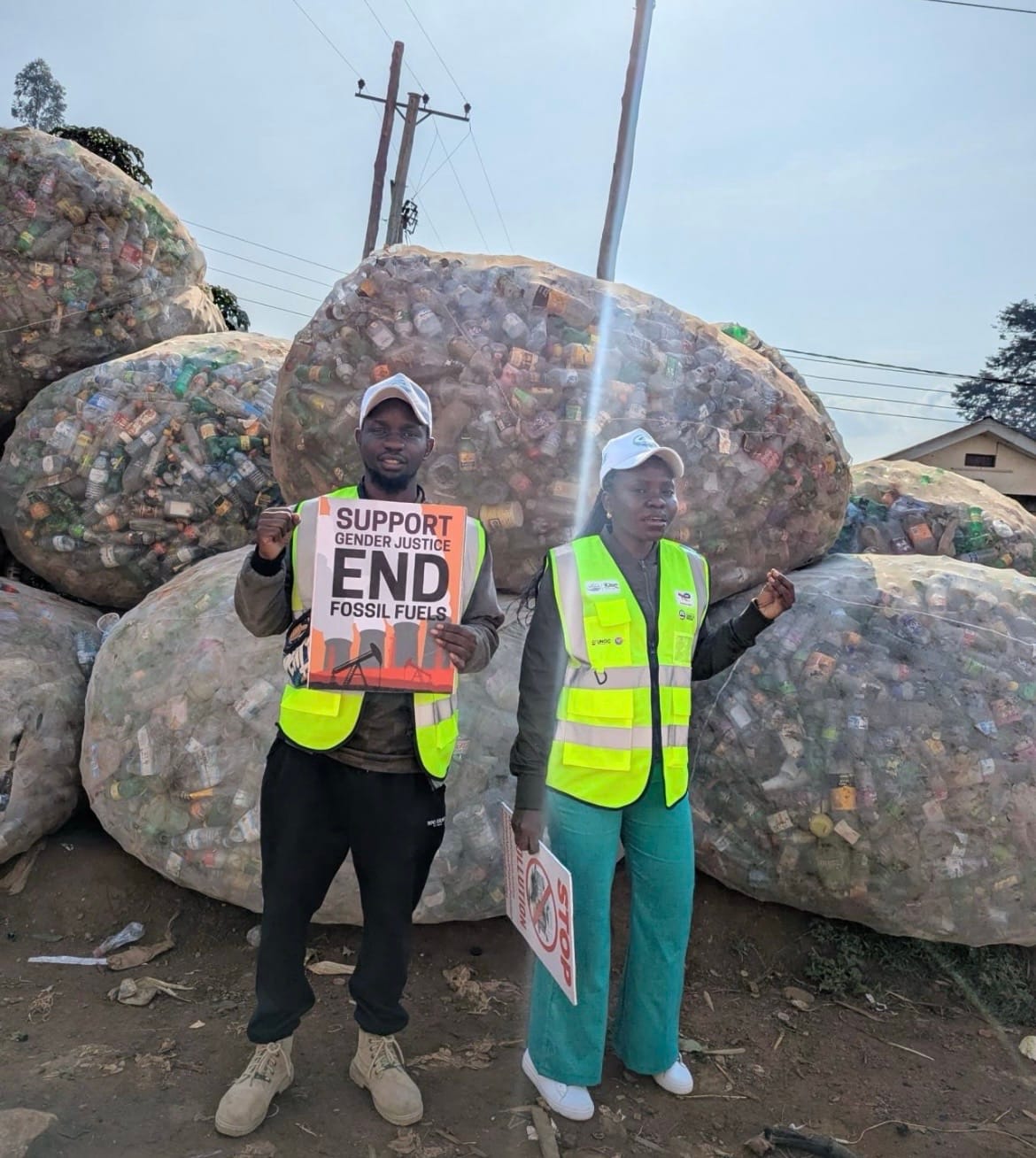
"A just energy transition should not be negotiable. It should be a must for these communities. Put people and the planet first — in whichever activity you bring into their lives."
– Ali Ogwang, Climate Justice Advocate, Uganda
Ali Ogwang is a Ugandan climate justice advocate and member of the country's enforcement field for clean energy transition, focused on community empowerment, environmental rights, and equitable energy access across Uganda. This interview was conducted by Clare Nassanga.