"We Are Building A Green Future On An Unjust Foundation" – Ugandan Activist Joan Namaggwa

When Joan Namaggwa speaks about energy poverty, she is not speaking in abstractions. She is speaking about the woman in rural Uganda who spends hours every morning collecting firewood before her children wake up for school. She is speaking about the family in a Kampala slum breathing toxic smoke from a charcoal stove because they have no alternative. She is speaking about communities whose land is being carved up by oil pipelines they did not consent to and will not profit from.
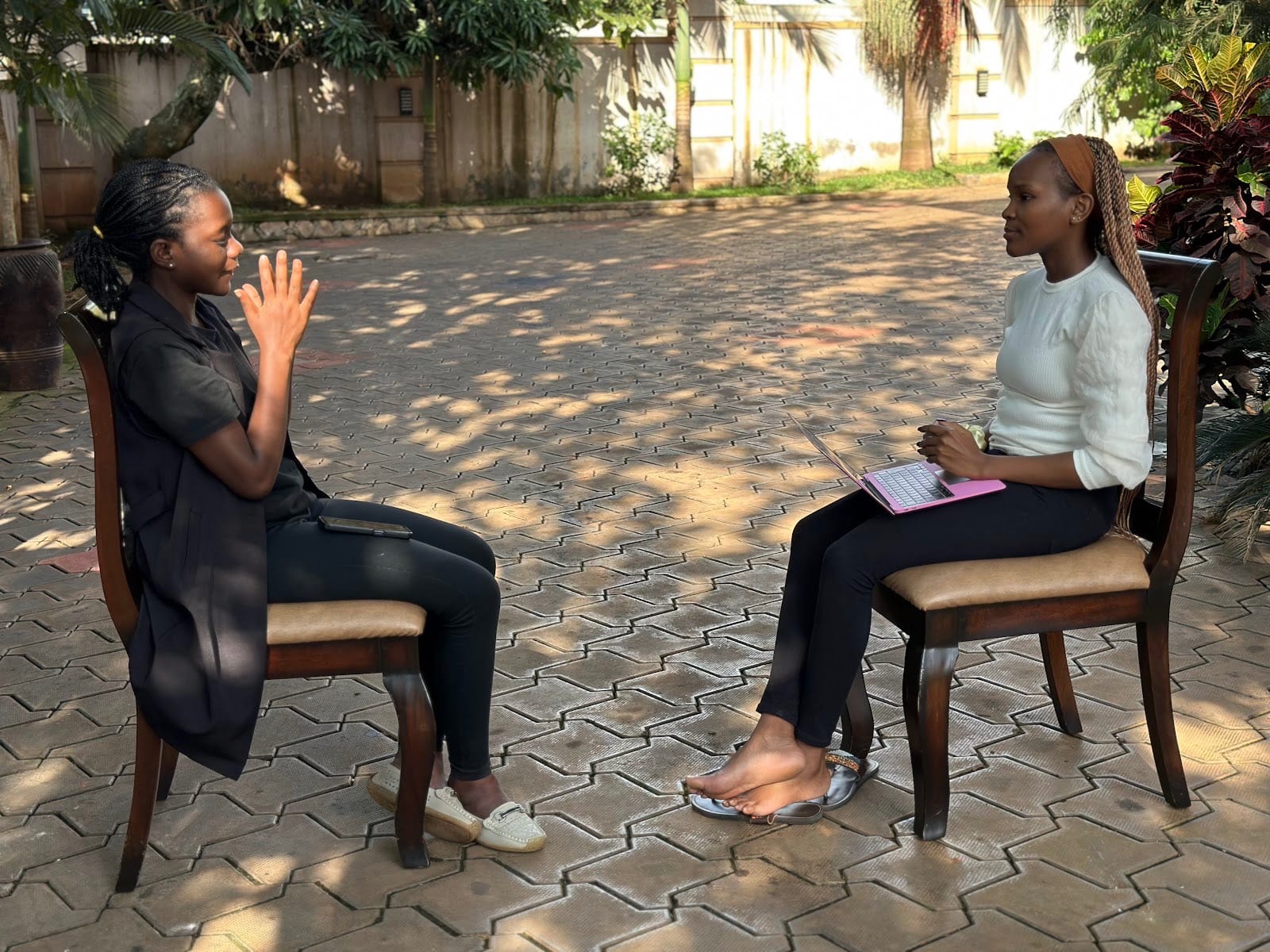
Namaggwa, a Ugandan girls' rights and climate activist, is emerging as one of the most articulate and urgent voices in the global environmental justice movement – one that insists the climate crisis cannot be solved without first confronting the deep inequalities that created it.
"Environmental justice reminds us that the climate crisis is not just about carbon. It is about people, power, and who has historically been asked to bear the cost of progress."
The Hidden Tax on Being Poor
At the center of Namaggwa's advocacy is a concept many people have never heard of – energy burden. It is, she explains, the percentage of a household's income spent just to keep the lights on and food cooking on the stove.
The accepted threshold is ten percent. Cross that line, and a household is considered to be under serious strain. In the United States, studies have shown low-income households spend three to five times more of their income on energy than wealthy ones. But in sub-Saharan Africa, where the International Energy Agency estimates over 600 million people lack electricity access altogether, the picture is even more severe.
"Here in Uganda, many households in rural and peri-urban areas are spending a significant portion of what little income they have on charcoal, firewood, and kerosene," Namaggwa says. "These are forms of energy that are not only expensive relative to income but harmful to health and to the environment."
The cruel irony, she points out, is unmistakable: the poorest communities are paying the most, for the least reliable, and most dangerous energy available.
"That is not an accident," she says flatly. "It is the result of systems and decisions that have consistently deprioritized the poorest communities."
Where Pollution Lives – And Who It Kills
The injustice does not stop at electricity bills. Namaggwa draws a sharp line connecting where polluting infrastructure gets built, who breathes the consequences, and why it almost always follows the same pattern.
Research from the U.S. Environmental Protection Agency found that Black communities are exposed to 56% more pollution than they actually produce – carrying the environmental cost of an industrial system they benefit from the least. Namaggwa sees the same logic playing out on her own continent.
"Communities along the East African Crude Oil Pipeline route in Uganda face land displacement and serious environmental risks while seeing very limited local benefit. Many of these are rural, low-income communities with little political leverage to negotiate the terms of what is happening on and around their land."
Then there is the heat island effect – dense, low-income urban neighborhoods where temperatures run five to ten degrees higher than wealthier, greener parts of the same city, driving up cooling costs and health risks for residents who can least afford either.
But it is the gender dimension that Namaggwa says receives the least attention in mainstream climate discussions.
"When a household relies on biomass cooking fuels, it is almost always women and girls who spend hours every day collecting that fuel," she says. "That time comes directly out of time that could be spent on education, on economic activity, on rest."
The World Health Organization estimates indoor air pollution from biomass cooking kills millions every year – with women and young children the most exposed.
"These are not isolated problems, They are structural inequalities playing out through the environment."
Consent Is Not a Checkbox
One of Namaggwa's sharpest critiques is aimed at how energy developers and governments engage – or fail to engage – with affected communities.
"For too long, consultation has meant showing up after the major decisions have already been made, presenting a plan, taking note of concerns, and then proceeding anyway," she says. "That is not consent. That is performance."
She points to the international standard of Free, Prior and Informed Consent (FPIC) as the minimum bar: communities involved from the design stage, with access to full information in their own language, with enough time to deliberate – and with the genuine power to say no.
Benefit-sharing, she argues, must be equally real. A community being told a solar farm will benefit the national grid is not enough.
"People need to see tangible benefits in their own lives – reduced energy costs, local jobs, ownership stakes in the projects being built on or near their land."
She points to community-owned solar mini-grids in parts of Kenya as a model that works – one where villages control their own pricing and access, transforming the relationship from extraction to genuine partnership.
When Justice Actually Shifted a Project
Asked for a concrete example of environmental justice changing real outcomes, Namaggwa points to South Africa's Renewable Energy Independent Power Producer Procurement Programme (REIPPPP).
After sustained pressure from civil society advocates who argued that large renewable energy projects were being built in communities that saw almost none of the economic benefit, the programme was redesigned. Developers were required to give communities mandatory financial ownership stakes through community trusts.
The results were tangible. Some communities used trust income to fund local schools, health facilities, and small business development. Project designs shifted – with stronger commitments to local hiring, reduced land disruption, and long-term environmental monitoring.
"What this example teaches us, is that justice does not happen automatically when you replace a coal plant with a solar farm. The technology can change while the power dynamics stay exactly the same."
The Green Gentrification Trap
Even well-intentioned environmental improvements carry risks, Namaggwa warns – and she does not shy away from naming it.
Green gentrification occurs when sustainability upgrades raise property values in low-income neighborhoods, pushing out the very residents who fought for those improvements. In cities like New York, documented cases show green redevelopment triggering waves of displacement.
In the African context, she says the dynamic looks different but is no less harmful.
"Here it is more likely to manifest as large solar farms, eco-tourism developments, or conservation projects that displace subsistence farmers, pastoralist communities, or small-scale land users from their land in the name of sustainability. The land is greened, the carbon is offset, and the community is gone."
Her verdict is cutting: "That is not justice. That is just a different kind of extraction wearing a green label."
The solution, she insists, requires affordable housing protections enforced before green development arrives, community ownership models, and genuine community-centered planning – not communities brought in at the end to validate decisions already made.
Data as a Tool for the Powerless
In the fight for environmental justice, Namaggwa identifies data as one of the most powerful weapons available – if wielded correctly.
She points to communities in India using low-cost air quality monitors to challenge polluters and hold authorities accountable. Similar approaches are emerging across Africa to document the health impacts of extractive industries. But she is firm on the ethical guardrails.
"Data should not just study communities. It should serve and empower them. If the people whose lives are being measured are not the primary beneficiaries of what that data produces, something has gone wrong."
Community data ownership – giving communities control over their own information – is, she says, a critically important emerging principle in this space.
What Justice Actually Costs – and Who Owes It
On the question of policy, Namaggwa argues that genuinely corrective tools are needed – not neutral ones.
"Neutral policies, applied to unequal starting points, simply reproduce inequality," she says.
She highlights targeted subsidies for low-income households, community energy ownership models, and just transition funds – like the European Union's Just Transition Fund designed to support coal-dependent regions – as critical instruments. She acknowledges Uganda's Rural Electrification Agency as a step in the right direction, but says advocates are clear that more must be done to ensure the poorest communities are not perpetually last in line.
At the global level, she lends her voice to the growing call for climate reparations and loss and damage finance for African nations – countries that contributed least to historical emissions but are bearing some of the heaviest consequences.
"Justice requires intentional correction. It requires us to look at who has been harmed, by whom, and to design policies that address that history directly."

"Environmental justice reminds us that the climate crisis is not just about carbon – it is about people, power, and who has historically been asked to bear the cost of progress. Until we address those questions of power and equity alongside our technical solutions, we will keep building a green future on an unjust foundation."
– Joan Namaggwa, Climate and Girls' Rights Activist, Uganda
Joan Namaggwa is a Ugandan climate and girls' rights activist focused on energy justice, community consent, and equitable transitions across sub-Saharan Africa.